Carpentry shows up in nearly every residential project, from the frame of an extension to the skirting in a bedroom. Some of it holds the house up and some of it is what you notice every day. Choosing the right carpentry contractor means matching the contractor to the kind of work you need.
The types of residential carpentry
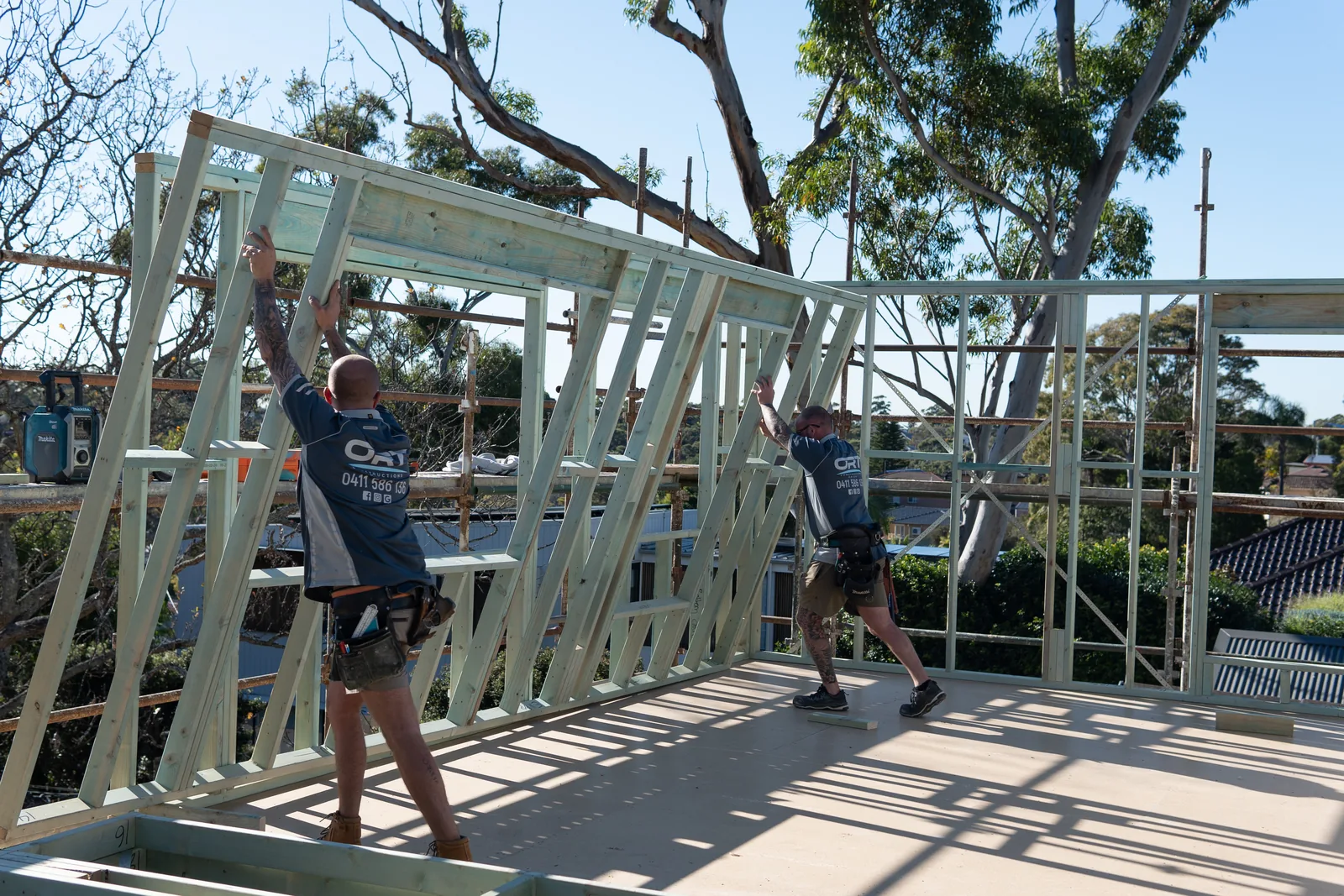
Structural carpentry and framing
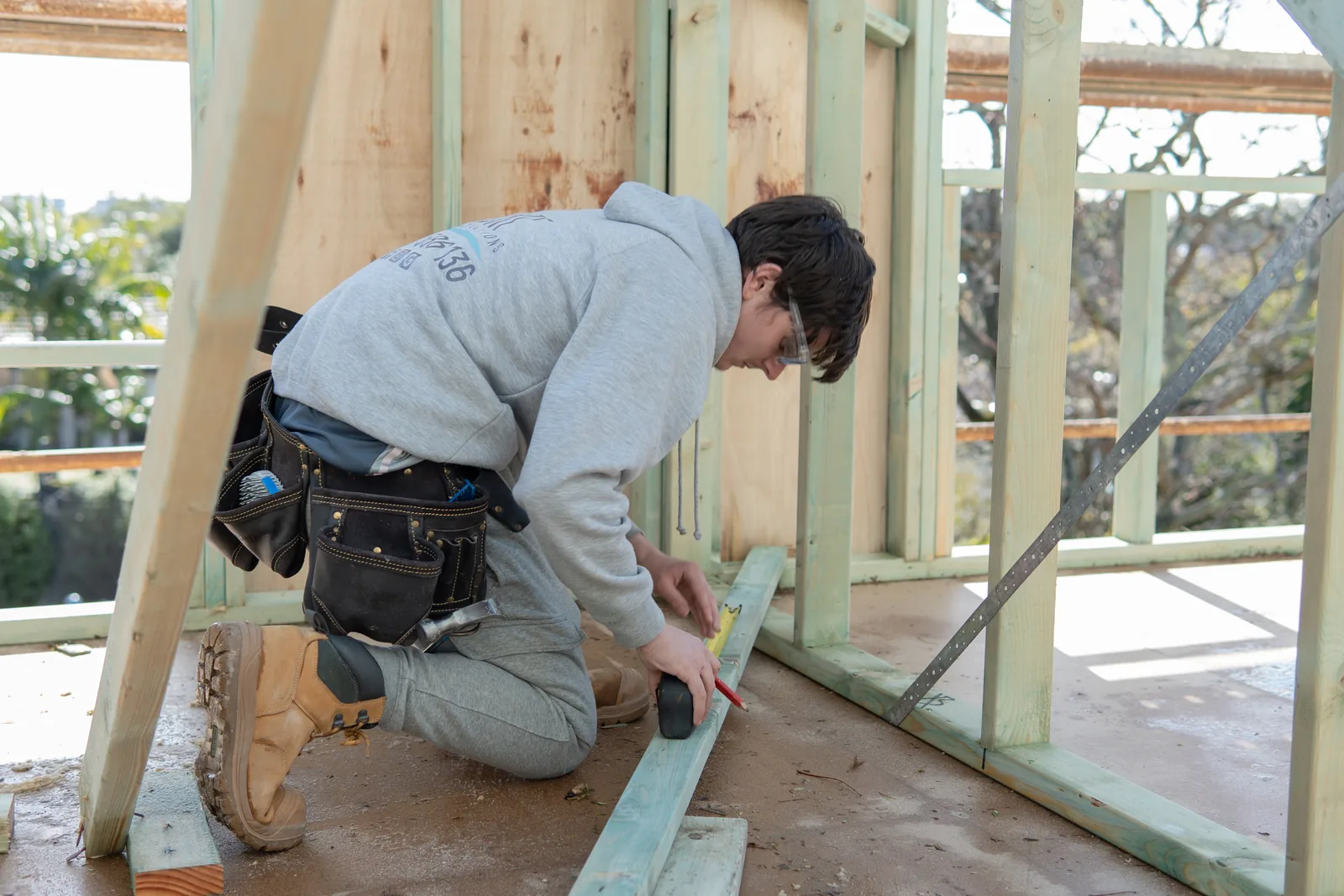
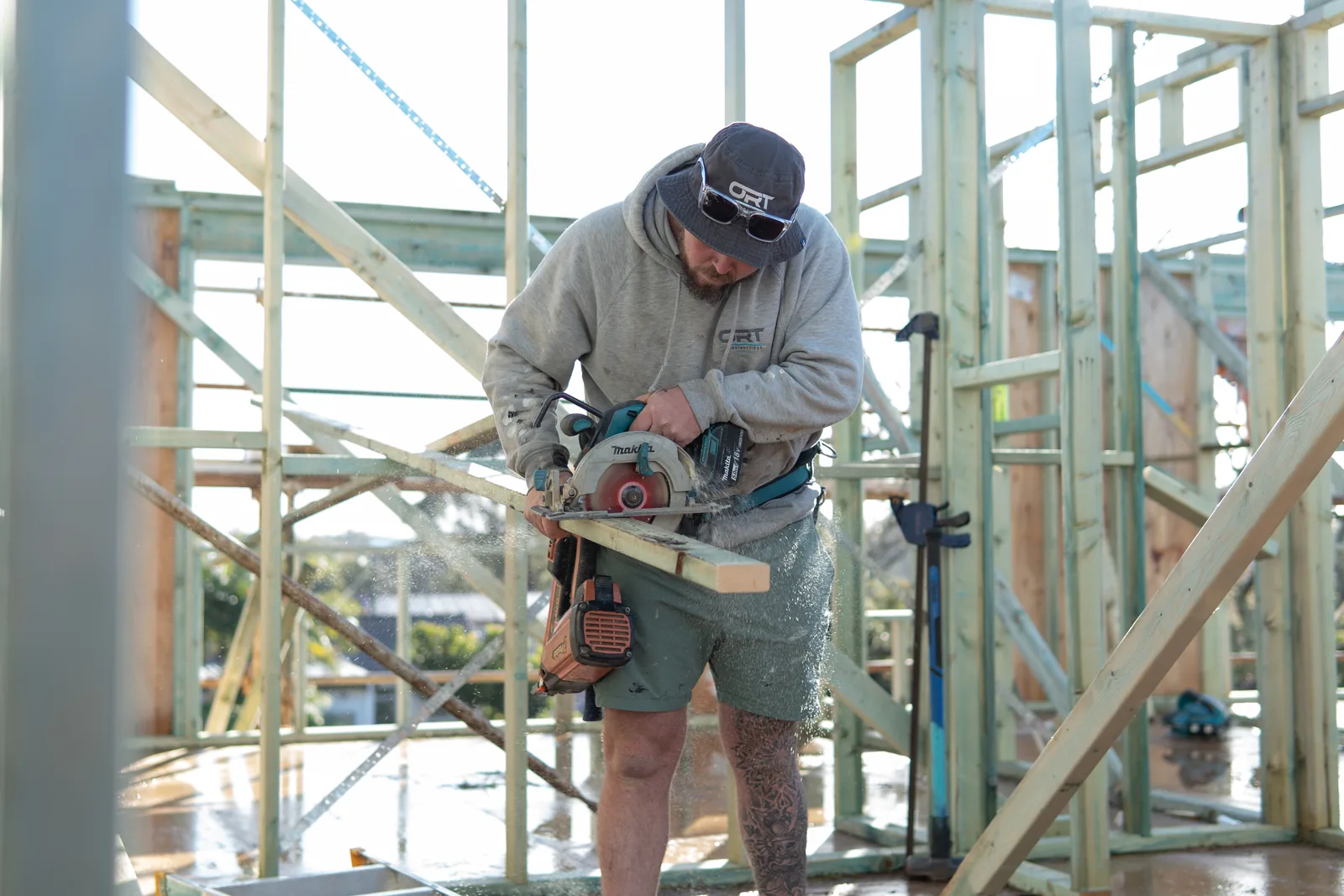
This is the frame of the building: wall frames, floor frames, roof framing and trusses, beams and lintels over openings. It is built to the engineer's drawings and to the Building Code of Australia and the relevant Australian Standards, including AS 1684 for residential timber framed construction.
Framing errors are expensive because every later trade works off the frame. Walls that are out of plumb make doors bind and tiling difficult. A roof that is out of line shows through the gutters for the life of the house.
Renovation carpentry
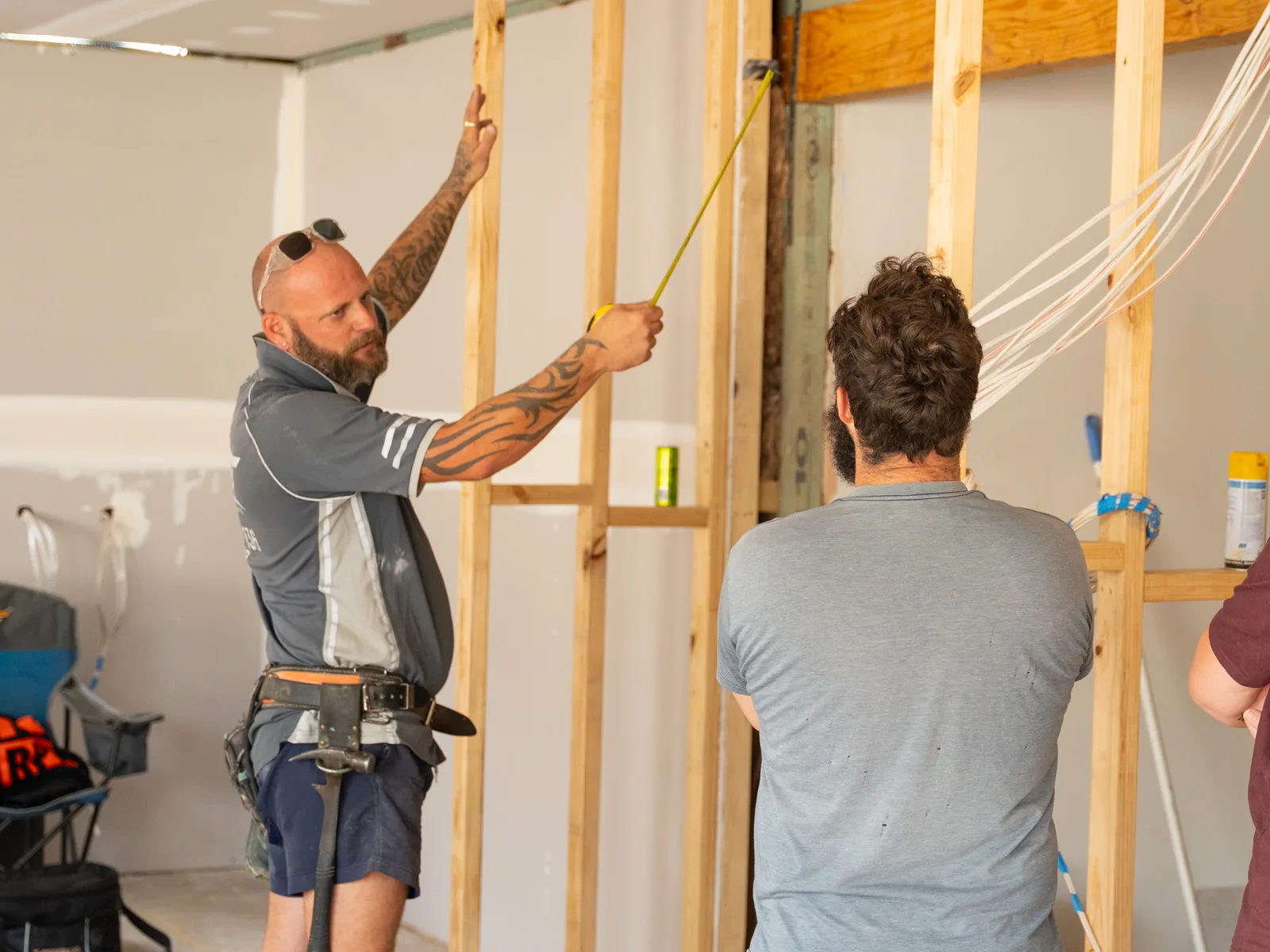
Working on an existing house is different to building new. Renovation carpenters remove and support walls, patch floors, form new openings and join new framing to old, often in houses that are no longer square.
A carpenter used to renovations knows to check what is behind a wall before cutting into it, and how to prop a structure safely while a beam goes in.
External timber work
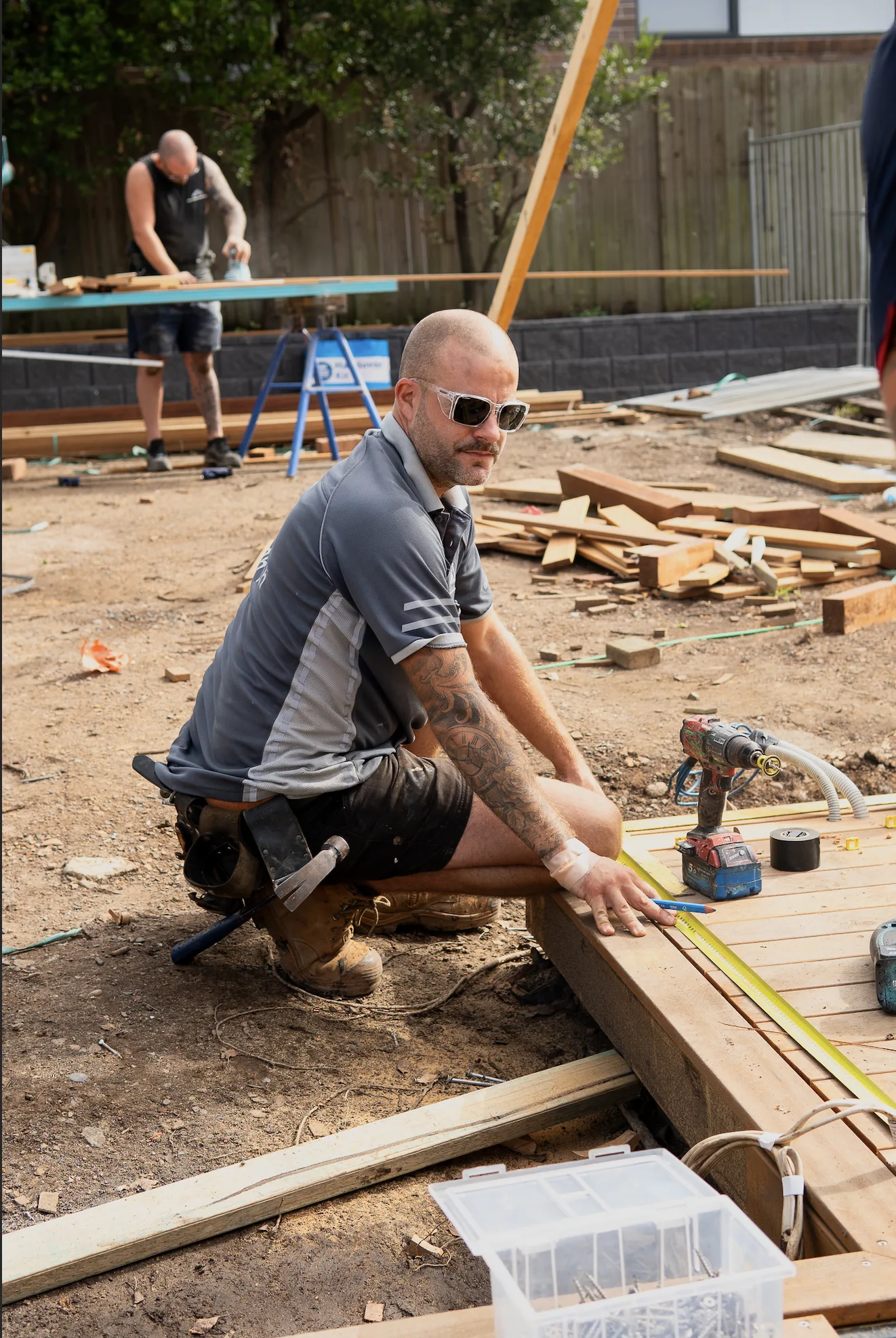
Decks, pergolas, stairs, screens and cladding are exposed to sun and rain, so detailing matters. That means the right timber or treatment for the exposure, stainless or hot dip galvanised fixings, ventilation under decks and clearances that keep timber off wet ground.
Finishing carpentry
Doors, architraves, skirting, panelling, shelving and built in joinery. This is where the standard of workmanship is most visible. Tight mitres, even reveals and straight lines take time and skill.
Licensing and insurance in NSW
In NSW, residential building work over the threshold set by NSW Fair Trading must be done by a licensed contractor, and work above the home building compensation threshold must be covered by home building compensation insurance. Check the licence on the Fair Trading register and make sure it covers the type of work being done.
A handyman can be fine for small repairs. Structural work, decks above certain heights and anything requiring engineering should go to a licensed builder or carpenter. Our article on when to hire a carpenter instead of a handyman covers where that line usually falls.
What to ask a carpentry contractor
- Is the work done by your own carpenters or subcontracted?
- Who checks set out and levels before the next trade starts?
- How do you protect the existing house during structural work?
- What timber species and fixings will be used outside?
- Is the quote itemised, and what is excluded?
Signs of quality workmanship
You do not need to be a builder to spot care on site.
- Frames are straight and plumb when checked with a level
- Timber is stored off the ground and covered
- Joints are tight and fixings are evenly spaced
- External fixings are stainless or galvanised, not plain steel
- The site is tidied at the end of each day
Matching the contractor to the job
For a deck or a few doors, a specialist carpenter may be all you need. For carpentry that is part of a larger build, such as an extension or a renovation with walls removed, a builder with carpenters in house can coordinate the structure, the other trades and approvals in one contract.
ORT Constructions has its own carpentry team and carries out structural and finishing carpentry across Sydney. See the work we do on our Sydney carpentry page, or read what a carpenter does during a renovation.
Frequently asked questions
- Do carpenters need a licence in NSW?
- Residential building work above the NSW Fair Trading threshold must be done by a licensed contractor. Check the licence covers carpentry or general building work.
- What is the difference between structural and finishing carpentry?
- Structural carpentry is the frame that carries loads, such as walls, floors, roofs and beams. Finishing carpentry is the visible trim and joinery fitted after linings go up.
- Which Australian Standard covers timber framing?
- AS 1684 covers residential timber framed construction, used alongside the National Construction Code and the engineer's design.